The circle
The Circle as a symbol.
Inspired by Sápmi and the wider Nordic cultural heritage, we hold the circle as a protector: of life, of death, of the cycles that carry one into the other. It is also the shape people take when they come together again as a village.
To draw a circle is to decide what is worth protecting.
What we do
O Community supports reconnection hubs. Farms and retreat centres that specialise in reconnecting people with nature through community and traditional practice, across ecology, culture and spirituality.
We represent several such hubs, and we work to grow both their number and their craft: better hubs, and better facilitators.
O Community is built to be excellent at facilitation. Holding groups, running programmes, supporting leadership teams and individuals. Rather than at administration, funding and partnership-building alone. The practice comes first; the structure serves it.
Where O Community comes from
O Community comes from a recognition: that it is time to reconnect with the circle, and sit around the fire together.
We believe that it is of vital importance to form a circle around what is worth protecting and supporting. Physical places that facilitate reconnection: with nature, with each other, and with ourselves.
Society has drifted. And a growing number of people are arriving at the same realisation: that we need to reconnect with nature, with the village, with land stewardship, and with the parts of our traditions, culture and history that are worth carrying forward. At the centre of all of it stands reconnection.
We believe that facilitating reconnection is the most effective approach to regenerate earth and secure sustainable conditions for generations to come.
What we see
Society needs reconnection, and there are great facilitators and places offering it.
But the great facilitators, farms and retreat centres offering real reconnection are spending too much time hustling with everything that surrounds it. Administration. Capability building. Running programmes with public stakeholders. Applying for grants.
The result is that many of the people doing this work wear out, and can thus offer less or poorer quality facilitation.
Reconnection hubs need to be run by people who are full of energy and empowered, free to focus on the facilitation itself. That is what we exist to support.
What we want these places to be
Sanctuaries for reconnection through community. Places that bring together the best of traditional knowledge, cultural heritage, ecological stewardship and the parts of our history worth bridging into modern ways.
We support the people who specialise in that bridging, carrying old knowledge and craft into modern methodology and technology.
Why we exist
To build resilience from the ground up.
Involving people and community in building knowledge around local resilience, localisation and holistic systems, integrating humans with nature, and learning to thrive without depending so heavily on global extractive systems.
To build peace from the inside out.
Gathering people around the fire. Cultivating a peaceful state of being, internally and with others, through community methodologies, through participation in stewardship, and through nature-based practice.
In this approach the world can see peace.
To be a bridge.
Connecting wisdom practitioners, elders and indigenous wisdom keepers with society at large, and creating programmes that support the young and the old.
To be a sandbox.
A workshop, a communal place for human expression, and, in essence, for reconnecting.
Rekindling the village fire
For most of our history, humanity has functioned in villages, smaller integrated neighbourhoods and tribes, where you see the effect of your actions, where you matter to your neighbour, where people show up for each other and share both the burden and the joy.
It takes a village to raise a child. It also takes a village to raise food, build resilience, to keep traditional knowledge alive, and to work out together what is worth protecting, integrating elders and the young, and people who are not necessarily like you, through communal practice and through simple work done side by side.
We believe the medicine of experiencing coherent community is essential for humanity to move forward. Nature-based community is how people reconnect: with themselves, with each other, and with nature. And from there it becomes natural to turn toward the knowledge earlier generations carried.
We want to be a place that makes space for those people, and a place that experiments with village-like structures, permanent and impermanent, working alongside local people and authorities to pave the way for a more connected way of living.
Timeline
Our history
Swipe
The story of the farm
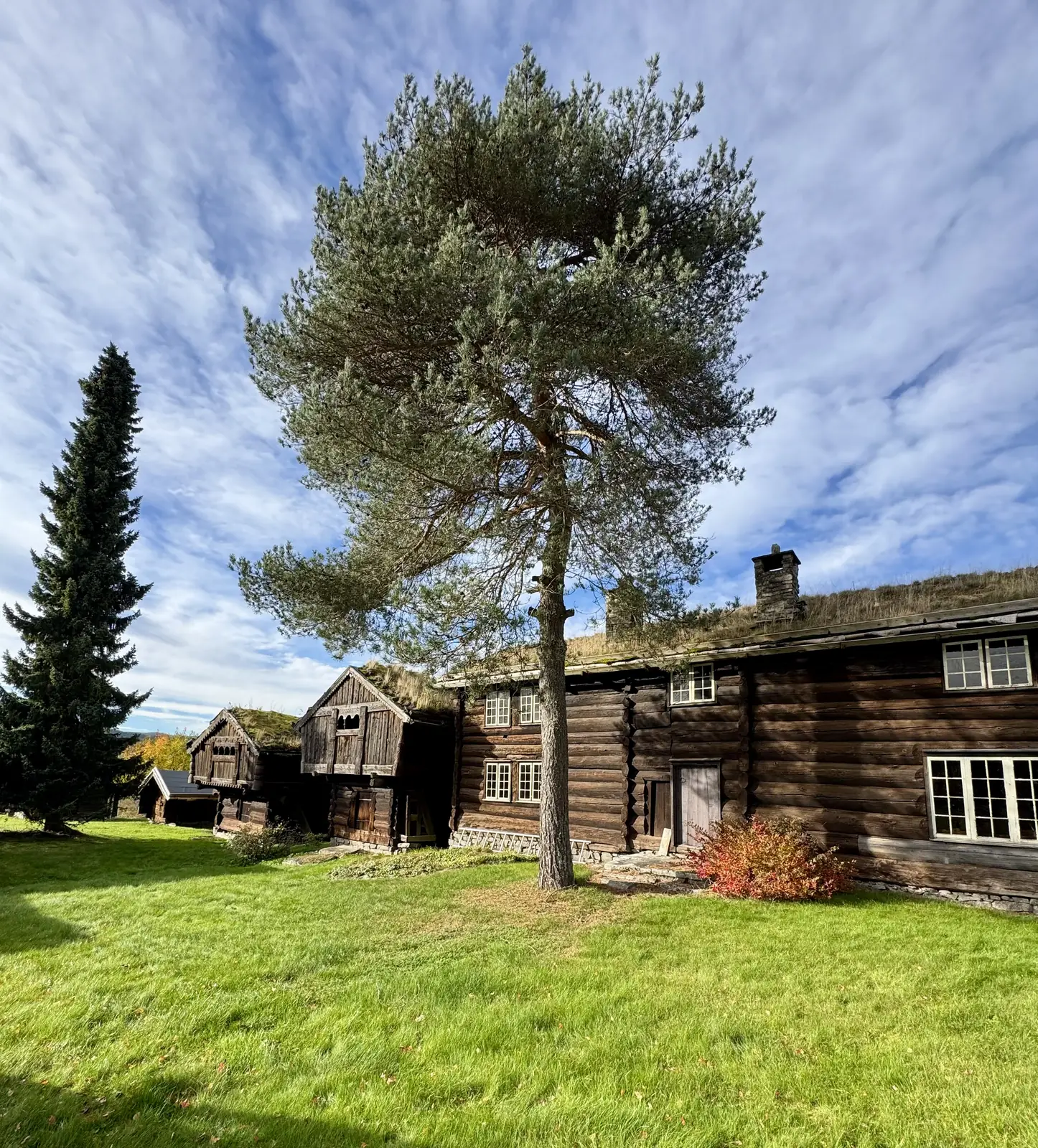
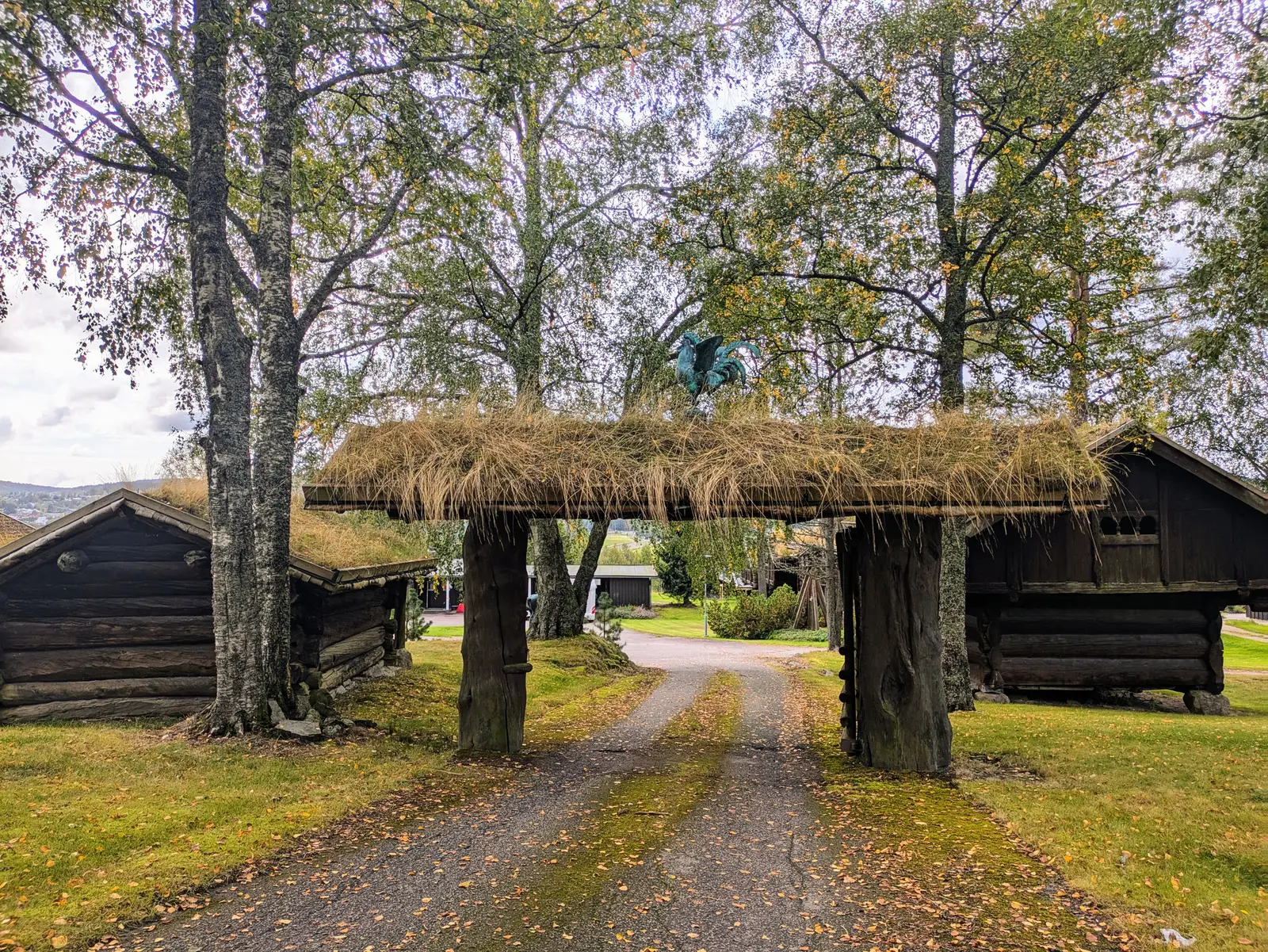
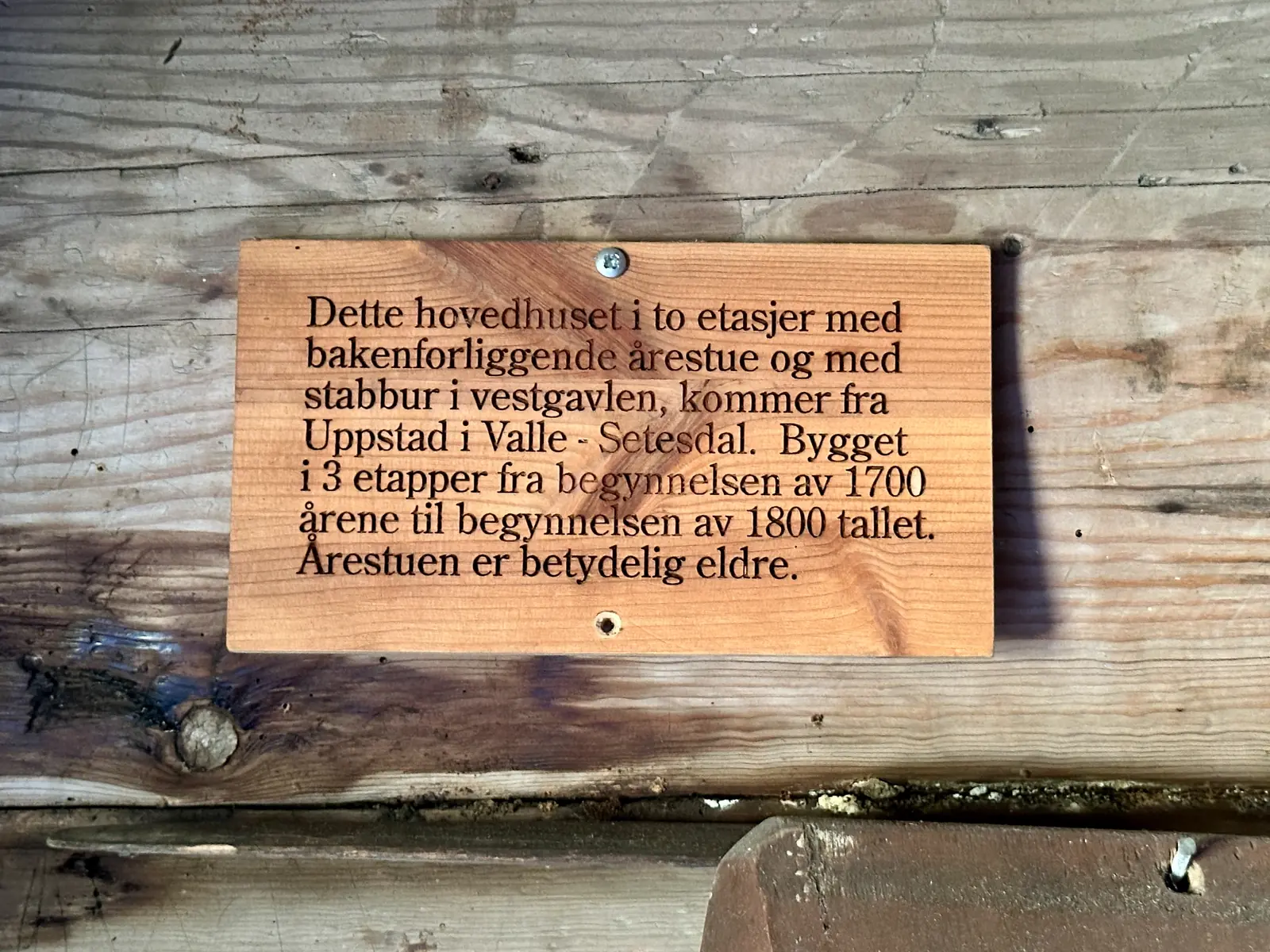
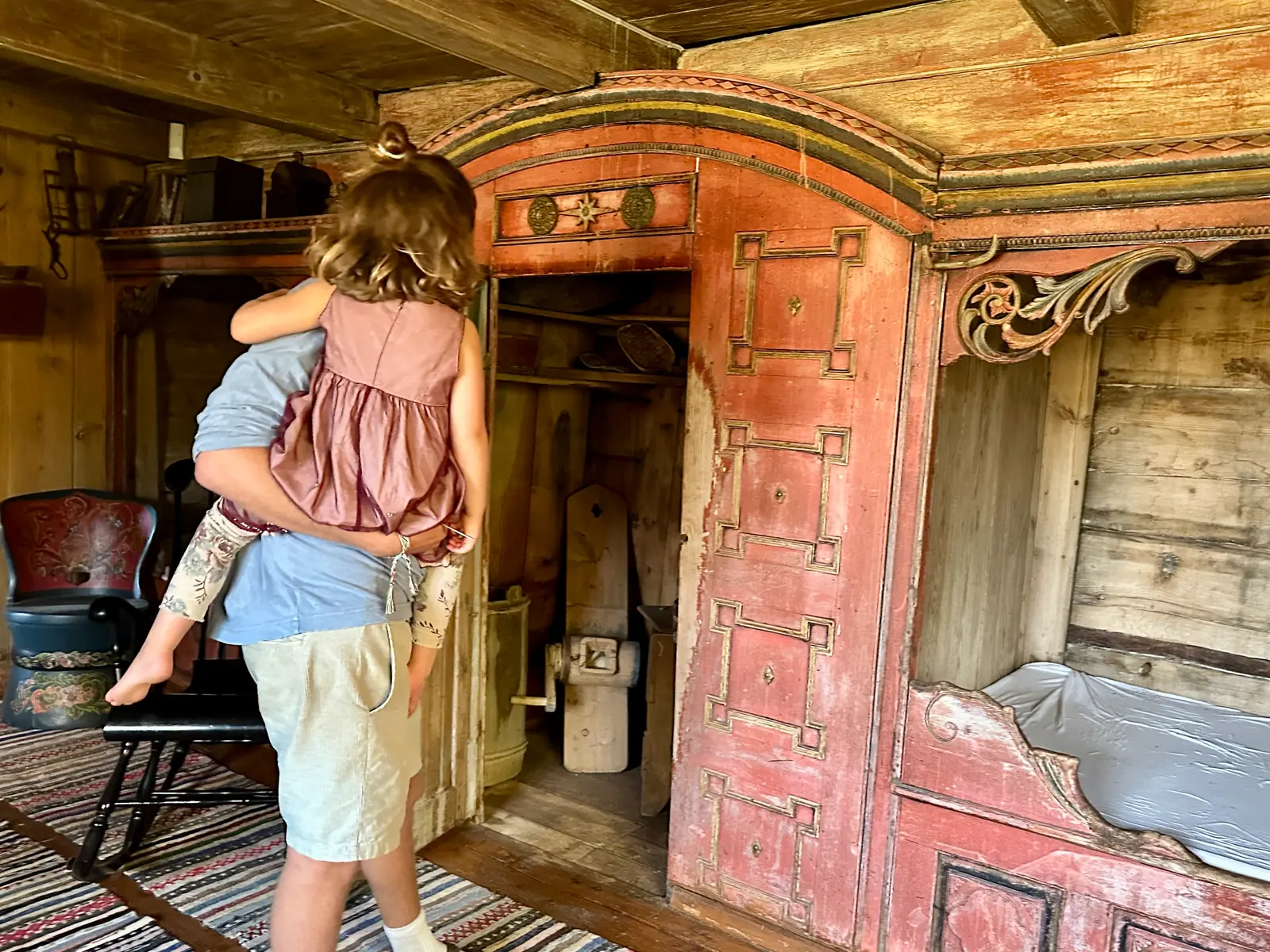
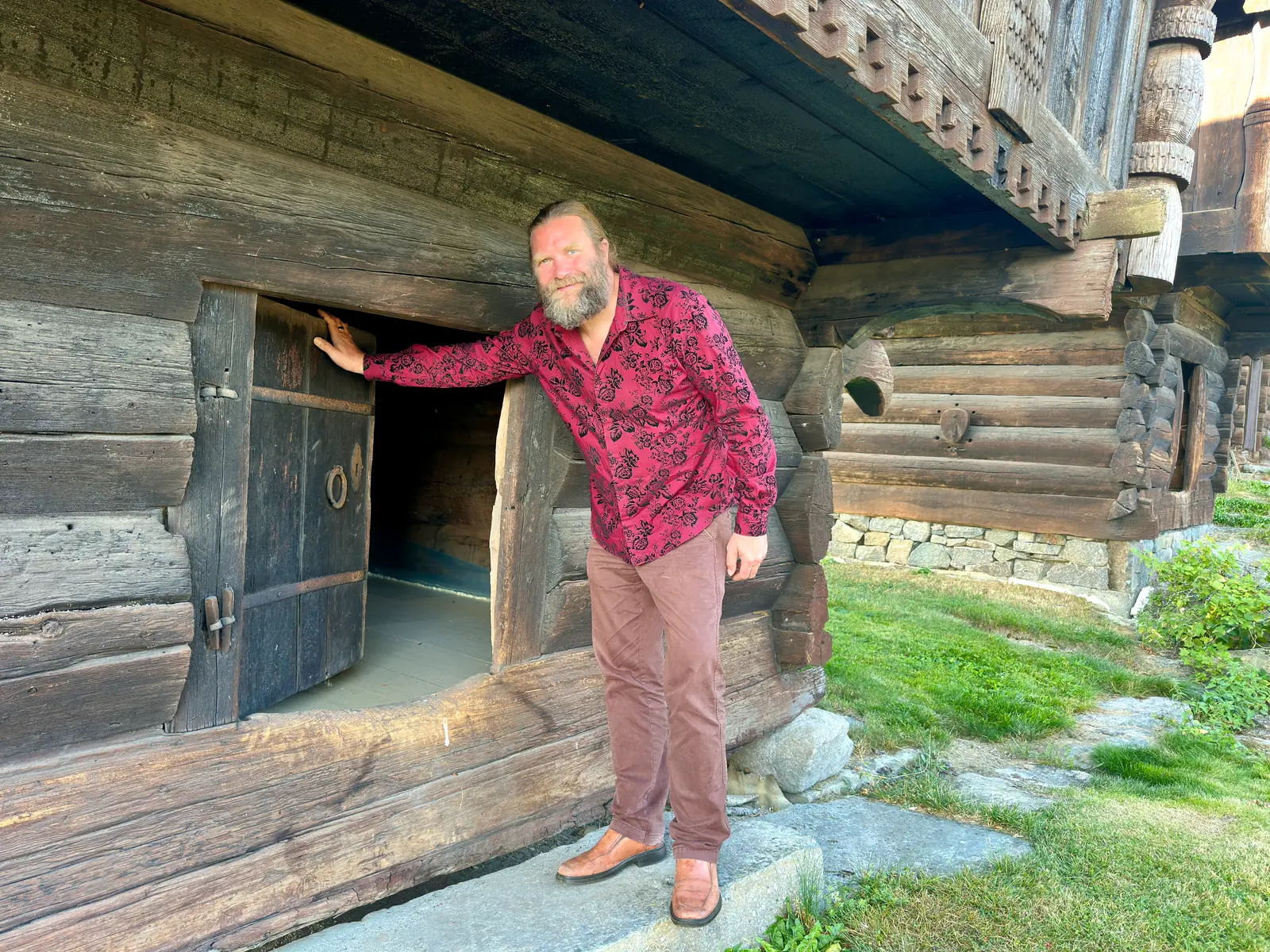
Many of the old houses here originally stood in Setesdal, raised between the 1300s and the 1800s. In the 1960s they were moved to this site to be restored and protected, because their previous owners could no longer care for them. The man who brought them here was Olav Selvaag, and he assembled the place much like a museum. It is very well cared for and carries tons of inspiration about historical craftsmanship, resilience, culture and everyday practices.
It became a holiday place for his family, and later passed to his daughter Cecilie and her husband Peik Nustad. Cecilie was a significant philanthropist and the founder of Karibu; during the anti-apartheid struggle, the farm housed people connected to that work. Amongst other things Østre Dal Gård has served as a sanctuary for Desmond Tutu, one of the leaders of the anti-apartheid movement, which is one of the rare historical examples we have from winning a battle of oppression. He gathered leaders in this farm to lay strategy for that battle, and relax to gain strength in his important work.
In 2009, Tharald Nustad took over. He spent the years since building impact investing companies and working with systems change, without much time to give this place, until 2025, when our organisation came in as stewards with an invitation to foster systems change from the ground up.
What we aim for here
- To establish homes as a klyngetun (a cluster farmstead) where we can practise and demonstrate living in community
- To rebuild the old barn, a thousand square metres, into a cultural gathering place with workshops, innovation tools, machines and a music studio, fostering wellbeing and mental health through programmes, among them support for Sámi artists making work
- To regenerate the land, and in time, when the timing is right, perhaps to build an ecological village here
Our home: Østre Dal Gård
Our main base is Østre Dal Gård in Nittedal, where we are building a community reconnection hub and destination.
Here we live the vision rather than describe it: going deep in our own specialisation, offering reconnection to those who come, and demonstrating for society what a connected life can actually look like.